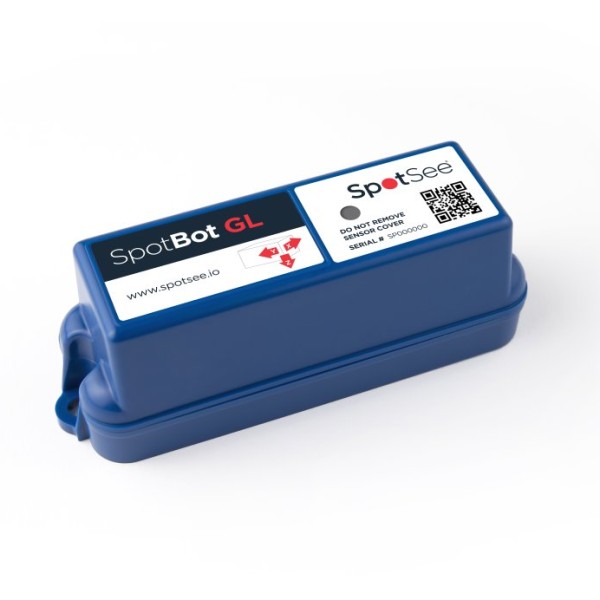


SPOTBOT GL
Shock, Environmental Conditions and Location Recorder
Advanced 4G connectivity for global shipment monitoring.
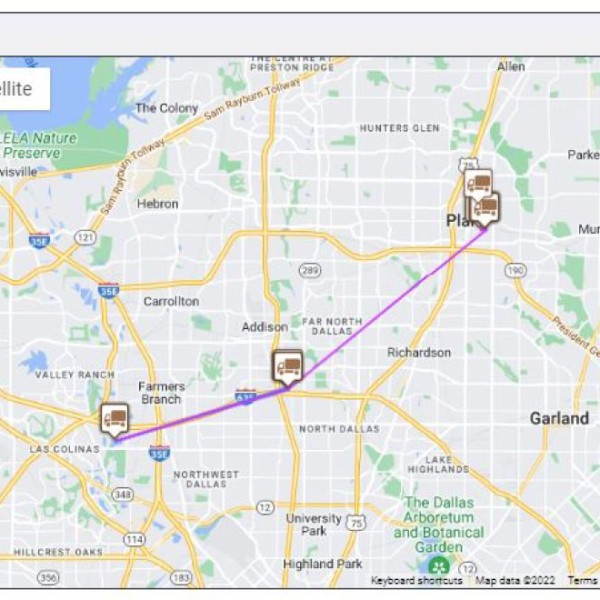
The SPOTBOT GL represents the evolution in intelligent shipment monitoring, combining triaxial impact detection (from 3.5 to 100G) with high-precision temperature and humidity sensors, all integrated with GPS location and 4G connectivity. This complete solution allows maintaining total control over products throughout the entire logistics journey.
With a battery life up to 3 years, SPOTBOT GL offers uninterrupted monitoring ideal for long-duration shipments and complex supply chains. The device is easily configured through a web application and transmits data to the secure SpotSee cloud via 4G cellular network, with Wi-Fi connection capability in areas with limited cellular coverage. Particularly suitable for biotechnology, pharmaceutical and diagnostic products, automotive components and power generation equipment, SPOTBOT GL provides detailed information that enables optimization of logistics processes and prevention of costly damage.
Problems solved by this product


Multifunction recorders represent the evolution of integrated monitoring, combining the control of shocks, vibrations and environmental conditions in a single compact device. These advanced instruments simultaneously record accelerations, temperatures, humidity and other critical parameters, providing a complete view of the conditions experienced by goods during the entire logistics process. The ability to correlate mechanical events with environmental variations enables in-depth analysis to optimize packaging and handling procedures.
The implementation of monitoring systems offers a tangible ROI (Return On Investment) through the reduction of costs arising from damages and returns, which represents the most immediate benefit. The improvement of service quality increases customer satisfaction and strengthens corporate reputation. The devices provide objective documentation to handle complaints, facilitate the identification of unreliable logistics suppliers and allow for negotiating more favorable insurance conditions. Systematic data collection supports predictive analysis to optimize packaging, transport routes and storage methods.
Monitoring systems find strategic application in the pharmaceutical industry to maintain drug efficacy, in the food sector to preserve the cold chain, in precision electronics where shocks and vibrations can compromise delicate components. Other critical sectors include the transport of artworks, scientific instruments, medical equipment and all high-value products that require optimal transport conditions and complete documentation of their status during handling.
Controlled preservation system that maintains temperature-sensitive products within specific temperature ranges during transport, storage and distribution. Cold chain monitoring uses thermal indicators and temperature recorders to prevent thermal breaks that could compromise the effectiveness of drugs, vaccines and biological products, ensuring safety and regulatory compliance.
Electronic device reusable or single-use designed to automatically record environmental parameters such as temperature, humidity and atmospheric pressure during transport and storage. Data loggers generate detailed reports with charts and statistics to ensure regulatory compliance and predictive analysis of the supply chain, particularly critical for pharmaceutical and food products.
Internet of Things applied to monitoring systems for real-time transmission of environmental and movement data through 4G/5G, WiFi, Bluetooth and GPS connectivity. IoT monitoring devices enable remote control, automatic alerts, cloud dashboards and integration with ERP/WMS systems, offering complete visibility over the supply chain and timely intervention capabilities.
Tamper-proof shock indicators that detect and irreversibly signal potentially damaging impacts during transportation and handling of goods. When the device experiences a shock exceeding the preset G-level, the red liquid contained inside leaks out, visibly coloring the signaling area, providing indisputable evidence of improper handling and serving as a deterrent for logistics operators.
Ability to monitor and completely document the journey and conditions experienced by a product throughout the entire supply chain. Traceability in monitoring includes recording physical and environmental parameters, critical events, GPS location and precise timestamps, ensuring objective evidence for insurance claims, regulatory compliance and optimization of logistics processes through data analysis.
Precision sensor that measures acceleration along the three spatial axes (X, Y, Z) to detect shocks, vibrations and movements during handling and transport. The accelerometers used in monitoring systems allow to identify harmful events and correlations between mechanical stress and damage to sensitive products.