





PROPASECARD
Humidity indicators without cobalt dichloride
Immediate humidity control for the protection of your products.
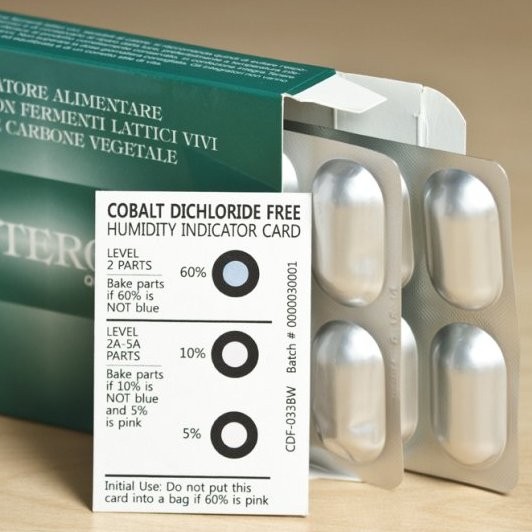
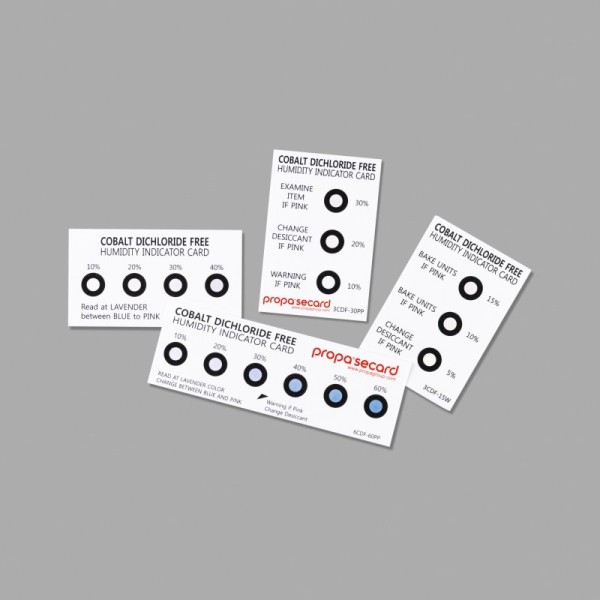
The PROPASECARD humidity indicators represent an innovative and safe solution for relative humidity monitoring inside packaging and storage environments. These devices, completely free of cobalt dichloride, use reversible reading spots that change from blue to pink when specific humidity values are exceeded, providing immediate visual indication of environmental conditions.
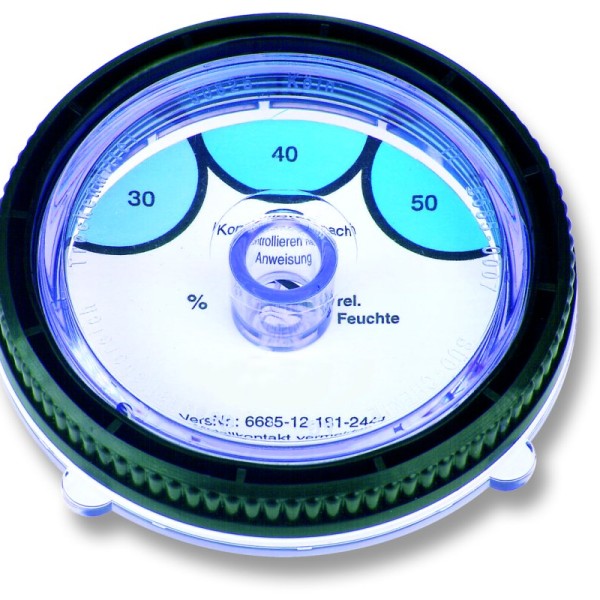
Capable of monitoring relative humidity from 5% to 90%, the PROPASECARD are particularly appreciated in the electronics sector, military components, optical instruments and works of art. The spots appear blue in color and turn pink when the various indicated humidity levels are reached, allowing operators to verify in real time when it is necessary to replace the desiccant material. This characteristic makes them indispensable tools for preventing moisture damage and maintaining the integrity of sensitive products throughout the entire logistics cycle. The version with window can also be inserted in covers, bags or protective caps in order to control the relative humidity rate inside the packaging from the outside.
Problems solved by this product


Propasecard indicators are efficient ambient condition indicators, especially for humidity; they are stiff cards with reversible reading spots for relative humidity. They are available in different configurations and can be used to check the degree of humidity from 5% to 95%. Another ambient condition indicator is the temperature indicator, which is an essential system in the case of substances or materials that can become altered if exposed to specific temperatures. It indicates the temperature, if the temperature is exceeded, and the length of time it is exceeded. Lastly, the ambient condition recorder allows you to check the temperature and humidity indices and monitor the ambient conditions.
The PROPASECARD humidity indicators represent an innovative solution for relative humidity monitoring inside packaging during transport and storage. Completely free of cobalt dichloride, they use reversible reading spots that change from blue to pink when specific humidity values from 5% to 90% are exceeded. Particularly appreciated in the electronics, pharmaceutical, military components, optical instruments and artwork sectors, they allow real-time verification of when desiccant material needs to be replaced.
To control the humidity level it is necessary to introduce a humidity indicator inside the product packaging. There are different kind of humidity indicators cobalt-dichloride free depending on the application and need.
Controlled preservation system that maintains temperature-sensitive products within specific temperature ranges during transport, storage and distribution. Cold chain monitoring uses thermal indicators and temperature recorders to prevent thermal breaks that could compromise the effectiveness of drugs, vaccines and biological products, ensuring safety and regulatory compliance.
Electronic device reusable or single-use designed to automatically record environmental parameters such as temperature, humidity and atmospheric pressure during transport and storage. Data loggers generate detailed reports with charts and statistics to ensure regulatory compliance and predictive analysis of the supply chain, particularly critical for pharmaceutical and food products.
Internet of Things applied to monitoring systems for real-time transmission of environmental and movement data through 4G/5G, WiFi, Bluetooth and GPS connectivity. IoT monitoring devices enable remote control, automatic alerts, cloud dashboards and integration with ERP/WMS systems, offering complete visibility over the supply chain and timely intervention capabilities.
Tamper-proof shock indicators that detect and irreversibly signal potentially damaging impacts during transportation and handling of goods. When the device experiences a shock exceeding the preset G-level, the red liquid contained inside leaks out, visibly coloring the signaling area, providing indisputable evidence of improper handling and serving as a deterrent for logistics operators.
Ability to monitor and completely document the journey and conditions experienced by a product throughout the entire supply chain. Traceability in monitoring includes recording physical and environmental parameters, critical events, GPS location and precise timestamps, ensuring objective evidence for insurance claims, regulatory compliance and optimization of logistics processes through data analysis.
Precision sensor that measures acceleration along the three spatial axes (X, Y, Z) to detect shocks, vibrations and movements during handling and transport. The accelerometers used in monitoring systems allow to identify harmful events and correlations between mechanical stress and damage to sensitive products.


